
Weather changes can bring more than fluctuating temperatures. During seasonal transitions, workplaces may see an increase in respiratory infections, viral fevers, and other illnesses as employees spend more time indoors, experience changing humidity, and come into contact with infected colleagues.
A single sick employee can sometimes expose several coworkers, particularly in crowded offices with shared equipment and poor ventilation. Understanding how infections spread—and taking practical preventive measures—can help reduce workplace fever clusters.
What Causes Fever Clusters at Work?
A fever is a symptom, not a disease itself. It can occur with many infections, including respiratory viral infections and other illnesses.
When several employees develop fever around the same time, a shared infectious exposure may be one possible explanation. Seasonal weather changes themselves do not directly cause infections. Instead, changing environmental conditions and workplace behaviors can influence how easily some infectious diseases spread.
Factors that can contribute include:
- Close contact between coworkers
- Poor ventilation
- Crowded meeting rooms
- Shared equipment and frequently touched surfaces
- Employees coming to work while sick
- Inadequate hand hygiene
- Increased indoor gatherings
- Sudden changes in temperature and humidity
Why Weather Transitions Can Increase Workplace Illness
Seasonal transitions can change how people behave and how long they spend indoors. Offices with closed windows, air conditioning, or limited ventilation can create environments where respiratory infections spread more easily.
Temperature changes may also affect comfort, sleep, and routine, but it is important not to assume that every fever during a weather change is simply a “seasonal fever.”
A persistent or significant fever should be evaluated based on the person’s symptoms and overall health.
1. Encourage Sick Employees to Stay Home
One of the most effective ways to reduce workplace transmission is to avoid exposing coworkers when someone is ill.
Employees experiencing fever or other potentially infectious symptoms should follow workplace sick-leave policies and seek medical advice when appropriate rather than feeling pressured to work in person.
Remote work, where practical, can sometimes allow an employee to continue essential tasks without exposing others.
2. Improve Workplace Ventilation
Good ventilation can reduce the concentration of infectious respiratory particles indoors.
Businesses can consider:
- Increasing outdoor-air ventilation where feasible
- Maintaining HVAC systems properly
- Improving airflow in meeting rooms
- Avoiding overcrowding in poorly ventilated spaces
- Holding meetings outdoors when practical
Ventilation is particularly important when respiratory illnesses are circulating.
3. Make Hand Hygiene Easy
Hand hygiene is a simple but important infection-prevention measure.
Encourage employees to:
- Wash their hands regularly with soap and water.
- Clean hands before eating.
- Wash hands after coughing, sneezing, or blowing the nose.
- Use an alcohol-based hand sanitizer when soap and water aren’t readily available.
Businesses can place hand sanitizer at entrances, meeting areas, and other high-traffic locations.
4. Clean Frequently Touched Surfaces
Workplaces don’t necessarily need constant deep cleaning, but regularly cleaning high-touch surfaces can help maintain a healthier environment.
Pay particular attention to:
- Door handles
- Light switches
- Shared keyboards
- Phones
- Elevator buttons
- Break-room surfaces
- Shared office equipment
Cleaning protocols should be appropriate for the type of infection and workplace environment.
5. Avoid Sharing Personal Items
During periods of increased illness, employees should avoid unnecessarily sharing:
- Water bottles
- Cups
- Food utensils
- Towels
- Personal electronic devices
Encouraging employees to use their own personal items can reduce opportunities for germ transmission.
6. Don’t Ignore Coughing and Respiratory Symptoms
Fever isn’t the only sign of a potentially contagious illness.
Employees should pay attention to symptoms such as:
- Cough
- Sore throat
- Runny or congested nose
- Fatigue
- Chills
- Muscle aches
- Headache
Depending on the illness, people may be contagious before or around the time symptoms become noticeable. Good respiratory hygiene therefore matters even when no one has a confirmed diagnosis.
7. Cover Coughs and Sneezes
Employees should cover coughs and sneezes with a tissue or their elbow rather than their hands.
Used tissues should be discarded promptly, followed by hand hygiene.
This small habit can reduce the spread of respiratory droplets and contaminated secretions in shared spaces.
8. Maintain Healthy Daily Habits
Preventive workplace health also starts outside the office.
Employees can support overall health by prioritizing:
- Adequate sleep
- Regular physical activity
- Balanced meals
- Adequate hydration
- Stress management
- Appropriate vaccinations recommended by their healthcare professional
These habits don’t guarantee that someone won’t become infected, but they support general health and resilience.
9. Be Careful With Air Conditioning and Temperature Changes
Moving repeatedly between very cold air-conditioned environments and hot outdoor conditions can be uncomfortable and may worsen symptoms in some people.
However, temperature changes alone don’t cause viral infections.
Practical steps include:
- Dressing appropriately for changing temperatures.
- Avoiding excessively cold office settings.
- Staying hydrated.
- Taking breaks from extreme temperature differences when possible.
If someone develops fever, chills, persistent cough, or other illness symptoms, they should not assume the symptoms are simply due to weather changes.
10. Create a Workplace Illness-Response Plan
Organizations can reduce confusion during illness clusters by establishing clear procedures before problems arise.
A basic plan can include:
- Encourage employees to report significant illness according to company policy.
- Allow appropriate sick leave without unnecessary pressure to attend work.
- Review ventilation in affected areas.
- Reinforce hand and respiratory hygiene.
- Clean frequently touched shared surfaces.
- Consider remote work where appropriate.
- Seek professional medical or public-health guidance if multiple employees become ill.
The response should depend on the suspected illness, number of affected employees, severity of symptoms, and local public-health recommendations.
What Should You Do If Several Employees Develop Fever?
A cluster of fever cases deserves attention, particularly if employees became ill within a similar period or worked closely together.
Organizations should avoid trying to diagnose the illness themselves. Instead:
- Encourage affected employees to seek medical advice.
- Record illness reports through appropriate workplace procedures.
- Identify whether employees share a workspace, event, or other potential exposure.
- Review ventilation and hygiene practices.
- Contact relevant public-health authorities when required or when a significant outbreak is suspected.
When Should Someone With Fever See a Doctor?
Many mild infections improve with rest and fluids, but medical advice may be appropriate when fever is persistent, severe, recurrent, or accompanied by concerning symptoms.
Seek prompt medical attention for symptoms such as:
- Difficulty breathing
- Chest pain
- Confusion
- Severe weakness
- Persistent vomiting
- Severe dehydration
- Severe headache or stiff neck
- A rapidly worsening condition
People who are very young, elderly, pregnant, immunocompromised, or living with certain chronic conditions may need earlier medical evaluation.
How Employers Can Build a Healthier Workplace
Preventing workplace illness shouldn’t begin only after several employees become sick.
Employers can establish preventive measures throughout the year:
Improve Air Quality
Maintain ventilation and HVAC systems and identify poorly ventilated areas.
Encourage Sick Leave
Employees should feel comfortable staying home when they are potentially contagious.
Promote Hygiene
Make handwashing facilities and sanitizer easily accessible.
Keep Workspaces Clean
Regularly clean high-touch shared surfaces.
Support Vaccination
Provide accurate information about recommended vaccinations and facilitate access where appropriate.
Promote Flexible Work Options
Remote or hybrid work can help reduce exposure when an employee is sick and is able to work safely.
Final Thoughts
Seasonal transitions can coincide with increases in workplace illness, but weather changes themselves are not the direct cause of most infectious fevers. Close contact, indoor environments, inadequate ventilation, and working while sick can all contribute to transmission.
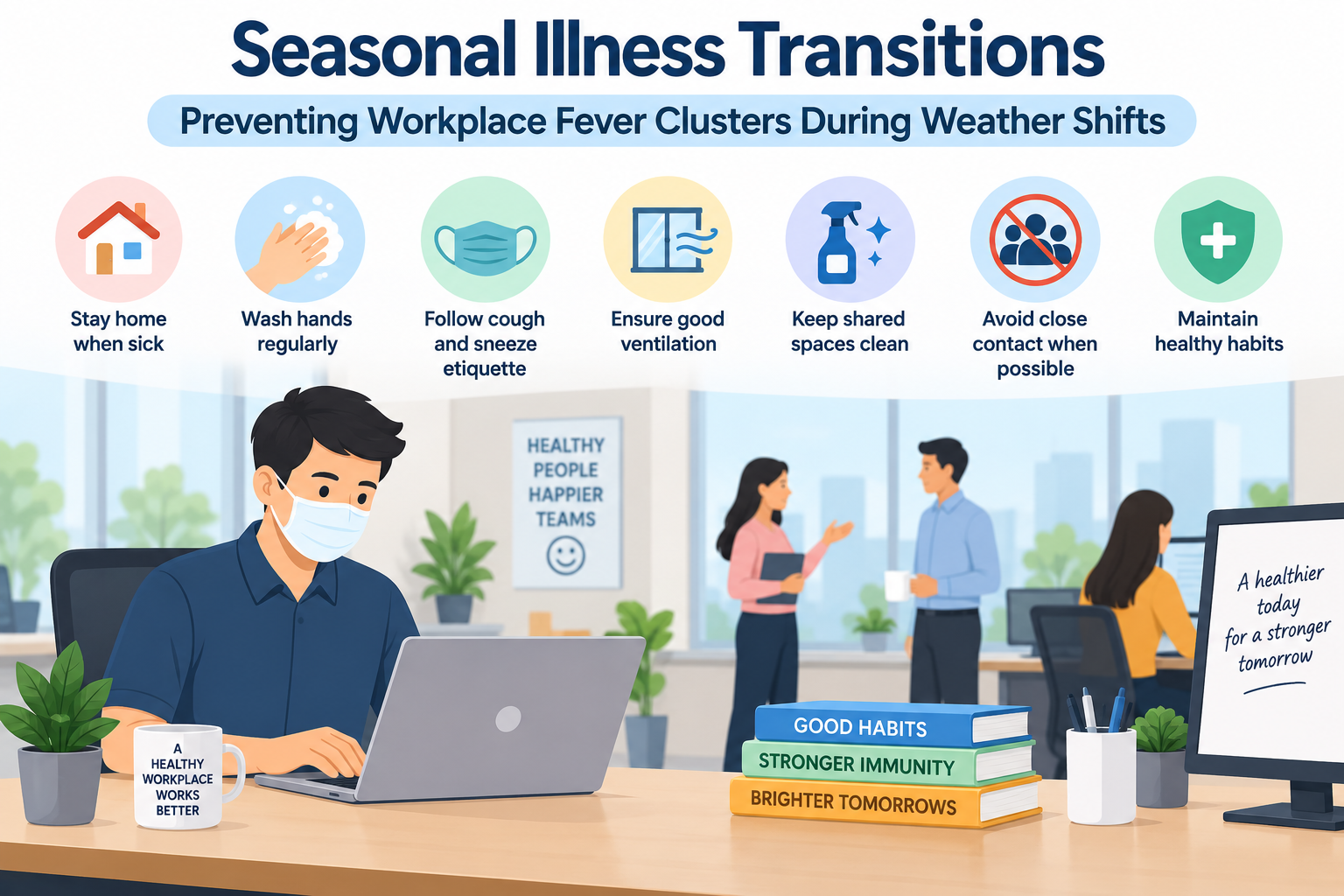
The best defense is prevention: encourage sick employees to stay home, improve ventilation, practice good hand and respiratory hygiene, maintain clean shared spaces, and respond promptly when several people become ill.
A workplace that prioritizes health doesn’t just reduce illness clusters—it creates a safer and more productive environment for everyone.