
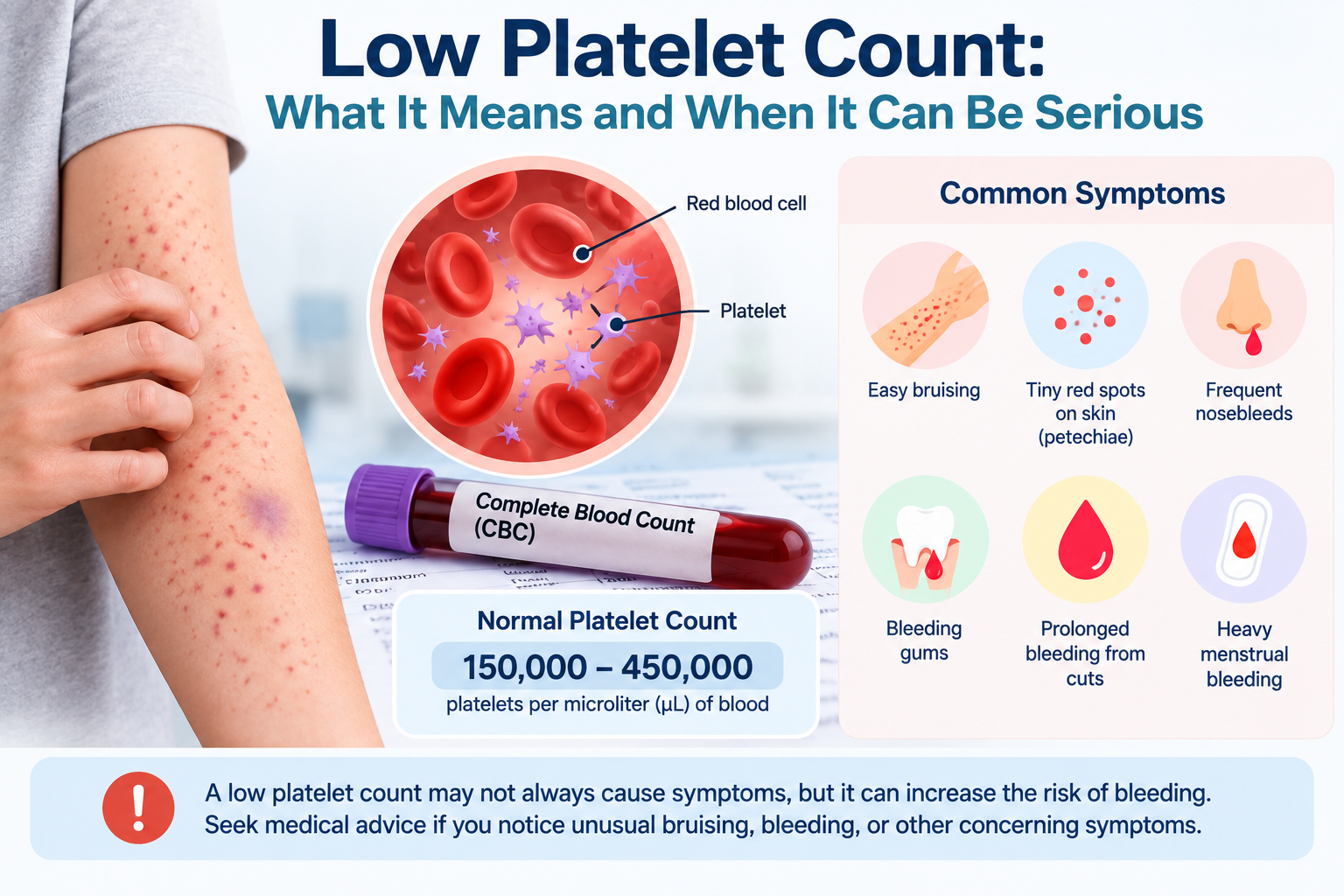

Platelets are tiny blood cells that play an important role in stopping bleeding. When you get a cut or injury, platelets gather at the site and help form a blood clot.
A low platelet count, medically known as thrombocytopenia, means there are fewer platelets in the blood than expected. In some people, a mildly low count causes no symptoms and is discovered during a routine blood test. In other cases, a significantly low platelet count can increase the risk of bleeding and may require prompt medical evaluation.
Understanding what a low platelet count means can help you know when further testing or medical attention may be necessary.
What Is a Normal Platelet Count?
For most adults, a typical platelet count is approximately:
150,000–450,000 platelets per microliter (µL) of blood.
A count below 150,000/µL is generally considered thrombocytopenia.
The severity can vary:
| Platelet Count | General Description |
|---|---|
| 100,000–150,000/µL | Mildly low |
| 50,000–99,000/µL | Moderately low |
| Below 50,000/µL | Significantly low |
| Below 20,000/µL | Very low and potentially associated with serious bleeding risk |
The actual risk depends on the underlying cause, how quickly the platelet count has fallen, other blood-test results, medications, and the person’s overall health.
What Do Platelets Do?
Platelets help your body control bleeding.
When a blood vessel is damaged, platelets:
- Move toward the injured area.
- Stick to the damaged blood vessel.
- Become activated.
- Join together to form an initial platelet plug.
- Work with clotting proteins to strengthen the clot.
When platelet levels are too low, the body may have more difficulty controlling bleeding.
What Causes a Low Platelet Count?
There are several possible causes. A low platelet count doesn’t automatically mean a serious disease is present.
1. Viral Infections
Some viral infections can temporarily reduce platelet production or increase platelet destruction.
Depending on the infection and circumstances, platelet levels may fall during or after illness.
2. Certain Medications
Some medicines can cause thrombocytopenia by affecting platelet production or triggering an immune reaction.
If your platelet count falls after starting a medication, tell your doctor about all prescription medicines, over-the-counter drugs, and supplements you take.
Never stop a prescribed medication without medical advice.
3. Vitamin Deficiencies
Severe deficiencies of vitamin B12 or folate can affect blood-cell production and may contribute to a low platelet count.
A doctor may recommend blood tests to investigate nutritional deficiencies when appropriate.
4. Immune Thrombocytopenia
In immune thrombocytopenia (ITP), the immune system mistakenly targets and destroys platelets.
ITP can occur in children or adults and may sometimes develop after an infection or without an obvious trigger.
5. Liver Disease
Certain liver conditions can affect platelet levels. An enlarged spleen associated with liver disease can also hold onto more platelets than usual, reducing the number circulating in the bloodstream.
6. Enlarged Spleen
The spleen normally removes old or damaged blood cells from circulation. If it becomes enlarged, it may retain an excessive number of platelets.
7. Bone Marrow Disorders
Platelets are produced in the bone marrow. Conditions affecting bone-marrow function can therefore reduce platelet production.
These may include certain blood disorders, cancers, and other medical conditions.
8. Pregnancy
Some pregnant women develop a mild decrease in platelet count known as gestational thrombocytopenia.
However, a significant or rapidly falling platelet count during pregnancy requires medical evaluation because certain pregnancy-related conditions can cause serious thrombocytopenia.
What Are the Symptoms of Low Platelets?
Mild thrombocytopenia may cause no noticeable symptoms.
When platelet levels become significantly low, symptoms can include:
- Easy or unusual bruising
- Tiny red or purple spots on the skin called petechiae
- Frequent nosebleeds
- Bleeding from the gums
- Heavy menstrual bleeding
- Prolonged bleeding from minor cuts
- Blood in urine
- Blood in stool
- Unusually heavy or prolonged bleeding
The type and severity of symptoms depend partly on how low the platelet count is and how quickly it has changed.
What Are Petechiae?
Petechiae are tiny pinpoint red, purple, or brownish spots caused by small amounts of bleeding under the skin.
They may appear:
- On the legs
- Around the ankles
- On the arms
- Inside the mouth
- On other areas of the skin
A sudden increase in unexplained petechiae should be medically evaluated, particularly when accompanied by fever or other symptoms.
Can a Low Platelet Count Be Serious?
Yes, but not every low platelet count is an emergency.
A mildly reduced platelet count may simply require repeat testing and monitoring, particularly if the person feels well and there are no signs of bleeding.
The situation becomes more concerning when:
- The platelet count is very low.
- The count is falling rapidly.
- There is active bleeding.
- Other blood-cell counts are also abnormal.
- The person has a serious underlying illness.
- The low count develops during pregnancy.
- There are neurological or other concerning symptoms.
The underlying cause is just as important as the number itself.
When Is a Low Platelet Count an Emergency?
Seek urgent medical attention if low platelets are accompanied by:
- Heavy or uncontrolled bleeding
- Vomiting blood
- Black or bloody stools
- Blood in the urine
- Severe or sudden headache
- Confusion or changes in consciousness
- New weakness, numbness, or difficulty speaking
- Significant bleeding after an injury
- A very low platelet count identified on testing
Severe bleeding or symptoms involving the brain require immediate medical assessment.
How Is Low Platelet Count Diagnosed?
A complete blood count (CBC) is usually the first test used to identify a low platelet count.
If the result is abnormal, your doctor may consider:
- Repeating the CBC
- Examining a blood smear
- Reviewing previous platelet counts
- Checking medications and supplements
- Testing for infections when appropriate
- Checking vitamin levels
- Evaluating liver function
- Examining for an enlarged spleen
- Ordering additional tests based on the suspected cause
Sometimes a laboratory artifact called platelet clumping can make the platelet count appear falsely low, which is why repeat testing may be recommended.
How Is Low Platelet Count Treated?
Treatment depends entirely on the underlying cause.
For example, a doctor may recommend monitoring if the decrease is mild and temporary. If a medication is responsible, the treatment plan may involve changing or stopping that medicine under medical supervision.
Other patients may require treatment directed at an underlying infection, immune condition, nutritional deficiency, or blood disorder.
Severe thrombocytopenia or significant bleeding may require urgent hospital-based treatment.
There is no single treatment that is appropriate for every low platelet count.
What Should You Avoid With Very Low Platelets?
If your platelet count is significantly low, ask your doctor about activities and medications that could increase bleeding risk.
Depending on your situation, your healthcare professional may advise you to:
- Avoid contact sports or activities with a high injury risk.
- Take care with sharp objects.
- Avoid taking aspirin or certain pain medicines unless your doctor says they are safe.
- Report unusual bleeding promptly.
- Follow any restrictions provided by your healthcare team.
Don’t make medication changes based solely on a platelet number without professional advice.
Low Platelets During Fever: Why Evaluation Matters
A low platelet count can sometimes occur during infections. If someone has fever together with a low platelet count, the combination should be evaluated rather than treated as an isolated laboratory abnormality.
The cause may vary considerably depending on the person’s symptoms, medical history, recent infections, medications, and other blood-test results.
If fever is accompanied by bleeding, severe weakness, confusion, breathing difficulty, or rapidly worsening symptoms, seek urgent medical care.
Final Thoughts
A low platelet count can have many causes, ranging from temporary changes associated with illness to conditions requiring specialized medical treatment. A mildly low result without symptoms may not be immediately dangerous, while a very low or rapidly falling platelet count can increase the risk of serious bleeding.
If a blood test shows low platelets, don’t panic—but don’t ignore the result either. A general physician or hematologist can determine whether repeat testing, additional investigations, monitoring, or treatment is necessary.
Most importantly, seek urgent medical attention if you develop significant or uncontrolled bleeding, severe headache, confusion, or other serious symptoms.