
Protein Intake for Adults: How Much Do You Actually Need? Protein is an essential nutrient that supports muscles, bones, skin, hormones, enzymes, and immune function. But with so much conflicting advice about protein intake, many adults wonder: How much protein do I actually need every day? The answer depends on factors such as age, body weight, physical activity, pregnancy, health conditions, and fitness goals. Eating too little may make it harder to maintain muscle and recover from illness or exercise, while consuming very large amounts isn't necessarily better. Why Does Your Body Need Protein? Protein is made up of amino acids that your body uses to build and repair tissues. Adequate protein supports: Muscle maintenance and repair Healthy skin, hair, and nails Bone health Production of enzymes and hormones Immune function Recovery after exercise or illness Maintaining strength as you age Because your body doesn't store protein in the same way it stores carbohydrates and fat, regular intake throughout the day is important. How Much Protein Does an Adult Need? For a generally healthy sedentary adult, the standard recommended dietary allowance is approximately: 0.8 grams of protein per kilogram of body weight per day. For example: Body Weight Approximate Minimum Protein 50 kg 40 g/day 60 kg 48 g/day 70 kg 56 g/day 80 kg 64 g/day 90 kg 72 g/day These figures provide a general reference, not an individualized prescription. Your actual protein needs may be higher if you're physically active, pregnant or breastfeeding, older, recovering from illness or injury, or trying to preserve muscle during weight loss. Protein Needs Can Change With Age Protein becomes particularly important as people get older because muscle mass and strength naturally tend to decline with age. Older adults may benefit from paying closer attention to both total daily protein intake and protein distribution across meals. Combining adequate protein with resistance exercise can help support muscle strength and function. What About People Who Exercise? People who exercise regularly often require more protein than sedentary adults. Strength training, resistance exercise, endurance training, and other forms of physical activity increase the body's need for recovery and tissue repair. Rather than focusing only on a single large protein-rich meal, spreading protein across breakfast, lunch, dinner, and snacks can be a practical approach. If you're training intensively or have a specific athletic goal, a dietitian or qualified healthcare professional can help determine an appropriate intake. Protein During Weight Loss Protein can be useful during weight management because it helps support muscle while you're losing weight and can contribute to feelings of fullness. However, simply increasing protein isn't enough for healthy weight loss. A balanced diet should still include: Vegetables and fruits Whole grains and other high-fiber carbohydrates Healthy fats Adequate fluids Appropriate portions If you're losing weight rapidly or following a restrictive diet, professional dietary guidance can help ensure you're getting enough essential nutrients. Best Sources of Protein You don't need supplements to meet your protein needs. Many everyday foods provide protein. Animal-Based Sources Eggs Fish Chicken Lean meats Milk Yogurt Cottage cheese Plant-Based Sources Lentils Chickpeas Kidney beans Soybeans and tofu Peas Nuts Seeds Whole grains Combining different plant foods throughout the day can help provide a variety of essential amino acids. How Much Protein Is in Common Foods? Protein content varies by portion and preparation, but some commonly used foods include: 1 large egg: about 6 g 1 cup milk: about 8 g Greek yogurt: often around 15–20 g per serving, depending on the product 100 g cooked chicken: roughly 25–30 g 100 g cooked fish: roughly 20–25 g 100 g tofu: roughly 8–15 g, depending on the type 1 cup cooked lentils: roughly 18 g Food labels can provide more accurate amounts for specific products and serving sizes. Do You Need Protein Supplements? Not necessarily. Protein powders and shakes can be convenient when it is difficult to obtain enough protein from regular meals. However, they are supplements—not a requirement for most healthy adults. Whole foods provide protein along with other nutrients such as fiber, vitamins, minerals, and healthy fats. Before using high-protein supplements regularly, consider your overall diet and health needs. Can You Eat Too Much Protein? More protein isn't automatically better. Very high-protein diets can sometimes displace other important foods, such as fruits, vegetables, whole grains, and healthy fats. Some high-protein foods may also contain substantial amounts of saturated fat or sodium. People with kidney disease or certain other medical conditions may need individualized protein recommendations. They should not significantly increase protein intake without discussing it with their healthcare professional. Should You Eat Protein at Every Meal? Including a protein source at each main meal can make it easier to meet your daily requirement. For example: Breakfast: Eggs with whole-grain toast and yogurt Lunch: Dal, vegetables, rice, and curd Snack: Fruit with nuts or yogurt Dinner: Fish, chicken, tofu, or beans with vegetables and whole grains The exact combination can be adapted to your dietary preferences and nutritional needs. Signs You May Not Be Getting Enough Protein Protein deficiency isn't common among healthy adults eating a varied diet, but inadequate intake can occur in certain situations. Possible signs may include: Loss of muscle mass Reduced strength Poor wound healing Fatigue Frequent illness Unintentional weight loss These symptoms can have many other causes, so they shouldn't automatically be attributed to low protein intake. Who May Need More Protein? Protein requirements can increase in situations such as: Regular resistance or endurance training Older age Pregnancy and breastfeeding Recovery from surgery or significant injury Certain illnesses Periods of inadequate food intake Weight loss where muscle preservation is important The appropriate amount varies considerably, so individualized advice may be useful. A Simple Way to Improve Your Protein Intake You don't need to completely change your diet. Try these simple habits: Include a protein source at breakfast. Add dal, beans, tofu, eggs, fish, chicken, or dairy to meals. Choose minimally processed protein sources more often. Spread protein intake throughout the day. Combine protein with vegetables, whole grains, and healthy fats. Drink enough fluids. Don't rely entirely on protein supplements. When Should You Talk to a Doctor or Dietitian? Professional advice is especially useful if you: Have kidney or liver disease. Are pregnant or breastfeeding. Are recovering from surgery or a serious illness. Have unexplained weight loss. Have difficulty eating enough food. Follow a highly restrictive diet. Are considering a very high-protein diet. Are an athlete with specific performance goals. A healthcare professional can consider your medical history, weight, activity level, diet, and nutritional needs before recommending a protein target. Final Thoughts There is no single protein target that works for every adult. For a generally healthy sedentary adult, 0.8 g/kg of body weight per day is the standard minimum recommendation, but individual needs can be higher depending on age, activity, health status, and life stage. Rather than focusing on protein alone, aim for a balanced, varied diet that provides protein alongside vegetables, fruits, whole grains, healthy fats, and adequate fluids. If you have a medical condition or specific fitness or weight-management goal, speak with a doctor or registered dietitian before making major changes to your protein intake.

Protein Intake for Adults: How Much Do You Actually Need?

Protein Intake for Adults: How Much Do You Actually Need?

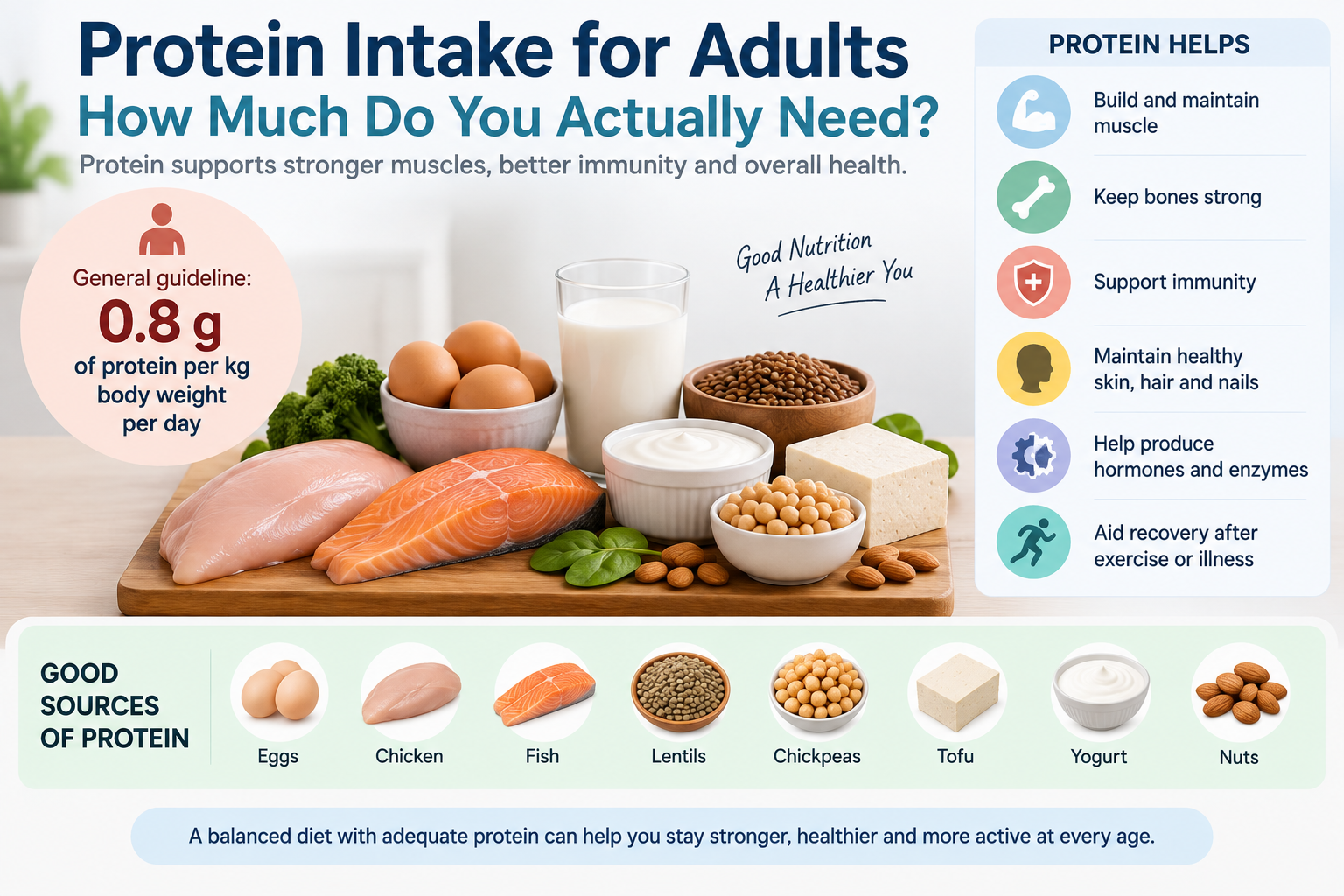
Protein is an essential nutrient that supports muscles, bones, skin, hormones, enzymes, and immune function. But with so much conflicting advice about protein intake, many adults wonder: How much protein do I actually need every day?

The answer depends on factors such as age, body weight, physical activity, pregnancy, health conditions, and fitness goals. Eating too little may make it harder to maintain muscle and recover from illness or exercise, while consuming very large amounts isn’t necessarily better.

Why Does Your Body Need Protein?

Protein is made up of amino acids that your body uses to build and repair tissues.

Adequate protein supports:

  • Muscle maintenance and repair
  • Healthy skin, hair, and nails
  • Bone health
  • Production of enzymes and hormones
  • Immune function
  • Recovery after exercise or illness
  • Maintaining strength as you age

Because your body doesn’t store protein in the same way it stores carbohydrates and fat, regular intake throughout the day is important.

How Much Protein Does an Adult Need?

For a generally healthy sedentary adult, the standard recommended dietary allowance is approximately:

0.8 grams of protein per kilogram of body weight per day.

For example:

Body WeightApproximate Minimum Protein
50 kg40 g/day
60 kg48 g/day
70 kg56 g/day
80 kg64 g/day
90 kg72 g/day

These figures provide a general reference, not an individualized prescription.

Your actual protein needs may be higher if you’re physically active, pregnant or breastfeeding, older, recovering from illness or injury, or trying to preserve muscle during weight loss.

Protein Needs Can Change With Age

Protein becomes particularly important as people get older because muscle mass and strength naturally tend to decline with age.

Older adults may benefit from paying closer attention to both total daily protein intake and protein distribution across meals.

Combining adequate protein with resistance exercise can help support muscle strength and function.

What About People Who Exercise?

People who exercise regularly often require more protein than sedentary adults.

Strength training, resistance exercise, endurance training, and other forms of physical activity increase the body’s need for recovery and tissue repair.

Rather than focusing only on a single large protein-rich meal, spreading protein across breakfast, lunch, dinner, and snacks can be a practical approach.

If you’re training intensively or have a specific athletic goal, a dietitian or qualified healthcare professional can help determine an appropriate intake.

Protein During Weight Loss

Protein can be useful during weight management because it helps support muscle while you’re losing weight and can contribute to feelings of fullness.

However, simply increasing protein isn’t enough for healthy weight loss.

A balanced diet should still include:

  • Vegetables and fruits
  • Whole grains and other high-fiber carbohydrates
  • Healthy fats
  • Adequate fluids
  • Appropriate portions

If you’re losing weight rapidly or following a restrictive diet, professional dietary guidance can help ensure you’re getting enough essential nutrients.

Best Sources of Protein

You don’t need supplements to meet your protein needs. Many everyday foods provide protein.

Animal-Based Sources

  • Eggs
  • Fish
  • Chicken
  • Lean meats
  • Milk
  • Yogurt
  • Cottage cheese

Plant-Based Sources

  • Lentils
  • Chickpeas
  • Kidney beans
  • Soybeans and tofu
  • Peas
  • Nuts
  • Seeds
  • Whole grains

Combining different plant foods throughout the day can help provide a variety of essential amino acids.

How Much Protein Is in Common Foods?

Protein content varies by portion and preparation, but some commonly used foods include:

  • 1 large egg: about 6 g
  • 1 cup milk: about 8 g
  • Greek yogurt: often around 15–20 g per serving, depending on the product
  • 100 g cooked chicken: roughly 25–30 g
  • 100 g cooked fish: roughly 20–25 g
  • 100 g tofu: roughly 8–15 g, depending on the type
  • 1 cup cooked lentils: roughly 18 g

Food labels can provide more accurate amounts for specific products and serving sizes.

Do You Need Protein Supplements?

Not necessarily.

Protein powders and shakes can be convenient when it is difficult to obtain enough protein from regular meals. However, they are supplements—not a requirement for most healthy adults.

Whole foods provide protein along with other nutrients such as fiber, vitamins, minerals, and healthy fats.

Before using high-protein supplements regularly, consider your overall diet and health needs.

Can You Eat Too Much Protein?

More protein isn’t automatically better.

Very high-protein diets can sometimes displace other important foods, such as fruits, vegetables, whole grains, and healthy fats. Some high-protein foods may also contain substantial amounts of saturated fat or sodium.

People with kidney disease or certain other medical conditions may need individualized protein recommendations. They should not significantly increase protein intake without discussing it with their healthcare professional.

Should You Eat Protein at Every Meal?

Including a protein source at each main meal can make it easier to meet your daily requirement.

For example:

Breakfast: Eggs with whole-grain toast and yogurt
Lunch: Dal, vegetables, rice, and curd
Snack: Fruit with nuts or yogurt
Dinner: Fish, chicken, tofu, or beans with vegetables and whole grains

The exact combination can be adapted to your dietary preferences and nutritional needs.

Signs You May Not Be Getting Enough Protein

Protein deficiency isn’t common among healthy adults eating a varied diet, but inadequate intake can occur in certain situations.

Possible signs may include:

  • Loss of muscle mass
  • Reduced strength
  • Poor wound healing
  • Fatigue
  • Frequent illness
  • Unintentional weight loss

These symptoms can have many other causes, so they shouldn’t automatically be attributed to low protein intake.

Who May Need More Protein?

Protein requirements can increase in situations such as:

  • Regular resistance or endurance training
  • Older age
  • Pregnancy and breastfeeding
  • Recovery from surgery or significant injury
  • Certain illnesses
  • Periods of inadequate food intake
  • Weight loss where muscle preservation is important

The appropriate amount varies considerably, so individualized advice may be useful.

A Simple Way to Improve Your Protein Intake

You don’t need to completely change your diet.

Try these simple habits:

  1. Include a protein source at breakfast.
  2. Add dal, beans, tofu, eggs, fish, chicken, or dairy to meals.
  3. Choose minimally processed protein sources more often.
  4. Spread protein intake throughout the day.
  5. Combine protein with vegetables, whole grains, and healthy fats.
  6. Drink enough fluids.
  7. Don’t rely entirely on protein supplements.

When Should You Talk to a Doctor or Dietitian?

Professional advice is especially useful if you:

  • Have kidney or liver disease.
  • Are pregnant or breastfeeding.
  • Are recovering from surgery or a serious illness.
  • Have unexplained weight loss.
  • Have difficulty eating enough food.
  • Follow a highly restrictive diet.
  • Are considering a very high-protein diet.
  • Are an athlete with specific performance goals.

A healthcare professional can consider your medical history, weight, activity level, diet, and nutritional needs before recommending a protein target.

Final Thoughts

There is no single protein target that works for every adult. For a generally healthy sedentary adult, 0.8 g/kg of body weight per day is the standard minimum recommendation, but individual needs can be higher depending on age, activity, health status, and life stage.

Rather than focusing on protein alone, aim for a balanced, varied diet that provides protein alongside vegetables, fruits, whole grains, healthy fats, and adequate fluids.

If you have a medical condition or specific fitness or weight-management goal, speak with a doctor or registered dietitian before making major changes to your protein intake.
Leave a Reply